Showing posts with label CAT_identity. Show all posts

Friday, November 25, 2011

Race and American inequalities


Douglas Massey is a leading US social scientist who has worked on issues of inequality in America throughout his career.  His 2008 book (Categorically Unequal: The American Stratification System) is a huge contribution to our understanding of the mechanisms producing inequalities in American society, and it amounts to a stunning indictment of racism and anti-poor public policies over a seventy-five year period. And, unlike other interpretations that attribute current racial inequalities to past patterns of overt discrimination, Massey argues that these inequalities can be traced to current discrimination by individuals and institutions alike. (An earlier book, American Apartheid, co-authored with Nancy Denton, is also very important.)

Massey is interested in a specific kind of inequality -- what he refers to as "categorical" inequality.  "All human societies have a social structure that divides people into categories based on a combination of achieved and ascribed traits" (1).  The kinds of categories he cites include gender, race, age, and membership in exclusive social organizations.  Categorical inequality, then, is defined as inequalities of income, wealth, or influence that vary systematically with membership in social categories.

How does categorical inequality work?  Massey has a simple answer to this question:
Given socially defined categories and people being distributed among them, inequality is generated and perpetuated by two basic mechanisms: exploitation and opportunity hoarding (Tilly 1998). Exploitation occus when people in one social group expropriate a resource produced by members of another social group and prefent them from realizing the full value of their effort in producing it. Opportunity hoarding occurs when one social group restricts access to a scarce resource, either through outright denial or by exercising monopoly control that requires out-group members to pay rent in return for access.  Either way, opportunity hoarding in enabled through a socially defined process of exclusion. (6)
Massey leads off his analysis with a theory of the social psychology of racism and discrimination against poor people. He argues that the stereotyping that is inevitably associated with social cognition leads to a pattern of discrimination against African-Americans, immigrants, women, and poor people that deepens and entrenches their unequal shares in American society. The twin mechanisms of discrimination and opportunity-hoarding both flow on the basis of the categories of discrimination created by these mental constructs – hence "categorical inequality". (Visit a recent posting for a related argument about the social psychology of prejudice.)
In a very real way, stratification begins psychologically with the creation of cognitive boundaries that allocate people to social categories. Before categorical inequality can be implemented socially, categories must be created cognitively to classify people conceptually based on some set of achieved and ascribed characteristics. The roots of social stratification thus lie ultimately in the cognitive construction of boundaries to make social distinctions, a task that comes naturally to human beings, who are mentally hardwired to engage in categorical thought (Fiske 2004). (8)
People use schemas to evaluate themselves and the social roles, social groups, social events, and individuals they encounter, a process known as social cognition (Fiske 2004). The categories into which they divide up the world may change over time and evolve with experience, but among mature human beings they always exist and people always fall back on them when they interpret objects, events, people, and situations (Fiske 2004). (9)
Massey hypothesizes two dimensions of mental categorization, leading to four gross categories of people in one's social category scheme: warm-cold (appealing-unappealing) and competent-incompetent. People who are like us are considered "warm" and "competent". The other three quadrants are categorized as "other": warm but incompetent (pitied), competent but cold (envied), and incompetent and cold (despised). And he asserts that American racism places African-Americans in the final category. This in turn is used to explain the harshly negative tilt that US legislation has shown across lines of race and poverty.


Massey argues that these cognitive mechanisms work at a pre-conscious level, and are operative even in the behavior and choices of people who consciously experience their values as democratic and egalitarian. These patterns of ongoing discrimination reinforce and reproduce social institutions that assign very different outcomes to African-Americans, poor people, and other dis-valued people. This works itself out in employment, advancement in a career, access to healthcare, and public policy and legislation.

A particularly valuable part of the book is the mass of elegant graphs that Massey has assembled. These represent an eye-opening narrative of discriminatory public policy over almost a century of legislation.  Here is a series of graphs of income inequality over parts of the twentieth century:


The crux of Massey's analysis here is that inequalities of wealth and income are generated by several mechanisms; but that key among these are the forms of discrimination that find their roots in social psychology and become operative through policy and law.  The gap between white and black median household income documented in figure 2.2 begins in the 1970s at about $20,000 and remains roughly that magnitude through 2002.  And these household income inequalities are created, he argues, through a complex of institutions (economic and political) that serve to compound discrimination and the disadvantages experienced by "out" groups. Moreover, these institutions work to the benefit of the privileged as strongly as they work to the harm of the disadvantaged; so the institutions are unlikely to change. "In other words, whether whites care to admit it or not, they have a selfish interest in maintaining the categorical mechanisms that perpetuate racial stratification. As a result, when pushed by the federal government to end overt discriminatory practices, they are likely to innovate new and more subtle ways to maintain their privileged position in society (Massey 2005c)" (54). This is a gloomy conclusion, and one that argues strongly for a passionate and sustained commitment to remedying the stark racial inequalities that exist in our society.

(Massey refers frequently to Susan Fiske's 2004 book, Social Beings: Core Motives in Social Psychology.  Here is a short article by Mary Wheeler and Susan Fiske that lays out some of their research on racial prejudice.)

Friday, September 23, 2011

Advertising and making consumers


There is a pervasive feature of modern economic life that never entered into the theories of the economists in the first century of the discipline: marketing, advertising, and the shaping of consumer desires. And yet this activity is itself a trillion-dollar industry, and arguably has greater effect on social values and consciousness than religion, politics, or the workplace. Our culture is flooded by marketing messages that surely have a vast cumulative effect on the ways we think about life and the things we value. And this feature of modern social life is radically different from pre-20th century -- village life in France in the 1880s, city life in 17th-century London, or even life in Chicago in 1920. So it's worth thinking about.

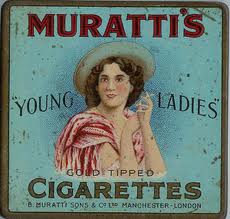
The images above come from of a google image search for "advertising 1900". They are all print ads for products around the turn of the twentieth century. There are several brands represented here that are still with us. Plainly advertising in newspapers and magazines was well entrenched by then.

So what factors made advertising a feature of mass society but not the medieval market town? Capitalism is about selling things. Companies need to generate demand for their products. So capitalism needs effective ways of stimulating new desires for products in consumers.

And this suggests one social factor that led to a dramatic increase in advertising and marketing in the late nineteenth century, the sharp increase in urbanization and modern transportation. These factors implied a strong increase in the density of demand and the circulation of consumers using modern transportation. When you have trolleys and railroads you have large numbers of people moving around, and they can be turned into consumers. This made it worthwhile to invest in marketing and advertising.

These observations take me in two directions. One is historical. I'm pretty sure that cities were much less visibly marketed and advertised in 1861 or 1911 than they are today. There must be some interesting work on the history of advertising, but the bottom line is this -- advertising was a product of an intensive consumer product society, and consumerism didn't really become dominant until the twentieth century. So living in Ghent, San Francisco, Grand Rapids, Stockholm, or New Orleans in 1880 would have involved a dramatically quieter environment when it came to product advertising and posters in public spaces. Here are a few street scenes to give an idea of the limited scope of street advertising at roughly the turn of the 20th century from Brussels, New York, and Manchester.


The other line of thought is more systemic. Why did we invent advertising at all in some fairly recent point in our past? Here a number of points seem salient.

Begin by considering the overall purpose of advertising. One aspect is informational. A goal of advertising is to bring information about products to the purchasing public. If everyone knows about your product, then there isn't a need to advertise it. Second, it is to bring about a positive attitude towards this product in that set of consumers. And third, it is to make the sale -- to give the consumer the emotional push needed to go ahead with the purchase.

Being systematic about advertising means being very specific about the targets of the campaign. What segments of the public does the business want to reach?

First, there are already people who would like to purchase something like product X but are not currently doing so. Here the challenge for the company is to get information about the product in front of these would-be buyers and induce them to make a purchase.

A second group of potential buyers are people who already consume a related product Y but might be persuaded to switch to X. Here the challenge is to create dissatisfaction with Y, or a new conviction that X is better. Cigarette marketing fell partially in this category when it was legal. The goal was to persuade smokers to switch from one brand to another, by implying the experience was better or the smoker would have greater social status. One brand sells "cool," another sells "masculine," another sells "sexy."

There is a third group that sellers would like to reach: people who currently don't want X at all, but might be induced to do so through appropriate messaging. This means changing preferences and creating new desires in the potential consumer. Tobacco advertising and children's cereals seem to fall in this category. Both have aimed to create new consumers -- children who "want" Captain Crunch and adolescents who want cigarettes.

And how about the golden grail -- whole societies that haven't yet acquired the desire for a category of product? Maybe it's luxury skin products in Nigeria, baby nursing formula in Kenya, Weber barbecue grills in Argentina, or Volkswagens in Indonesia. Here the goal is to quickly grow the consumer public interested in acquiring this product -- and positioning the brand so future competitors will have a hard time breaking into the market.

So advertising is about shaping the information people have, the desires and preferences they experience, and the attitudes and emotions they have towards products and the act of consumption. And it is fundamentally aimed at changing both consciousness and behavior. Seen from this point of view, advertising is deliberately a fundamental cause of the shaping of modern social consciousness.

There is a body of thought which focused on this aspect of capitalism and mass society, and that is the critical philosophy of the Frankfurt School. In Dialectic of Enlightenment (1944) Adorno and Horkheimer laid out an extensive critique of the culture industry and the role it played in modern capitalist society. Here are a few lines particularly relevant to advertising (link). Their interest here is the culture industry more generally, but much of their thinking sheds bright light on the role of advertising in mass consumer society.
Interested parties explain the culture industry in technological terms. It is alleged that because millions participate in it, certain reproduction processes are necessary that inevitably require identical needs in innumerable places to be satisfied with identical goods. The technical contrast between the few production centers and the large number of widely dispersed consumption points is said to demand organisation and planning by management. Furthermore, it is claimed that standards were based in the first place on consumers’ needs, and for that reason were accepted with so little resistance. The result is the circle of manipulation and retroactive need in which the unity of the system grows ever stronger. No mention is made of the fact that the basis on which technology acquires power over society is the power of those whose economic hold over society is greatest. A technological rationale is the rationale of domination itself. It is the coercive nature of society alienated from itself. Automobiles, bombs, and movies keep the whole thing together until their leveling element shows its strength in the very wrong which it furthered. It has made the technology of the culture industry no more than the achievement of standardisation and mass production, sacrificing whatever involved a distinction between the logic of the work and that of the social system.
...
The whole world is made to pass through the filter of the culture industry. The old experience of the movie-goer, who sees the world outside as an extension of the film he has just left (because the latter is intent upon reproducing the world of everyday perceptions), is now the producer’s guideline. The more intensely and flawlessly his techniques duplicate empirical objects, the easier it is today for the illusion to prevail that the outside world is the straightforward continuation of that presented on the screen. This purpose has been furthered by mechanical reproduction since the lightning takeover by the sound film.
...
The might of industrial society is lodged in men’s minds. The entertainments manufacturers know that their products will be consumed with alertness even when the customer is distraught, for each of them is a model of the huge economic machinery which has always sustained the masses, whether at work or at leisure – which is akin to work. From every sound film and every broadcast program the social effect can be inferred which is exclusive to none but is shared by all alike. The culture industry as a whole has moulded men as a type unfailingly reproduced in every product. All the agents of this process, from the producer to the women’s clubs, take good care that the simple reproduction of this mental state is not nuanced or extended in any way.
...
The most intimate reactions of human beings have been so thoroughly reified that the idea of anything specific to themselves now persists only as an utterly abstract notion: personality scarcely signifies anything more than shining white teeth and freedom from body odour and emotions. The triumph of advertising in the culture industry is that consumers feel compelled to buy and use its products even though they see through them.
Here is the first chapter of James Gordon Finlayson's Habermas: A Very Short Introduction, which offers some very helpful explication of the perspectives of the Frankfurt School on this set of issues.

Thursday, January 20, 2011

Violent rhetoric and violent behavior

Is there a possible causal relationship between an increasing occurrence of violent political rhetoric in broadly available media channels and the occurrence of violent political behavior?   How would a social scientist investigate this hypothetical relationship?   (Here is a pretty worrisome timeline of events, statements, and actions over the past several years involving violent rhetoric against the government and violent actions.)

Much of the debate since the Tucson shootings has focused on what seems like the wrong question: was there a direct influence from the extremist rhetoric of the past two years to the violent actions of this particular assailant?  Sometimes the answer to this kind of question is "yes" -- Timothy McVeigh was directly inspired by the violent ideas and passions associated with the right-wing militia movement.  But the harder question is that of indirect and diffused influence: is it possible for a pattern of virulent media communications to create a culture of violent attitudes that leads through indirect mechanisms to political violence directed against individuals and institutions?  

In order to think carefully about this set of issues, we need to think through the ways in which individuals are led to commit violent actions.  We might model the potentially violent person along these lines: Anger and hatred are emotional states that motivate violent attacks. Social inhibitions and processes of self-control work in most people to inhibit acting on hateful, violent impulses. Some social and physiological influences have the effect of weakening inhibitions. Individuals are most likely to engage in violence when hateful emotions are strongest and inhibitions are weakest. They are most likely to direct violence against symbols or representatives of the object of their anger and hatred.

Media and public discourse can affect each of these three factors. Angry speech can increase feelings of anger in the listener. This is very much the purpose of the speech; it is aimed at whipping up the passions of the viewer.  Second, it can focus angry impulses towards a specific group. Again, this is the goal; it is to focus anger on government, or government officials, or other groups. And it can lower inhibitions by positively valorizing violent action. "Your peers will admire you for taking action; other people have done so too. You are justified."

We might model the media ranters as involved in a game of escalation, competing against each other for greater shock value and virulent language. They have an interest in generating a committed audience, and they are competing with other voices for that audience. They have an interest in escalation.  "Shock radio" is intended to shock.

It doesn't appear that direct psychological research has yet been done on this question.  But there is a related question that has been very extensively studied, and that is the effect of dramatized television violence on children's propensity for aggression.  It appears that there is fairly strong evidence in the social psychology and developmental psychology literatures for a causal link between exposure to television violence in children and increased aggression.  Here is a paper in Developmental Psychology by L. Rowell Huesmann, Jessica Moise-Titus, Cheryl-Lynn Podolski, and Leonard Eron (link), where the authors find a significant link between childhood exposure to TV violence and adult aggression.
Over the past 40 years, a body of literature has emerged that strongly supports the notion that media-violence viewing is one factor contributing to the development of aggression. The majority of empirical studies have focused on the effects of watching dramatic violence on TV and film. Numerous experimental studies, many static observational studies, and a few longitudinal studies all indicate that exposure to dramatic violence on TV and in the movies is related to violent behavior (Huesmann & Miller, 1994; Huesmann, Moise, & Podolski, 1997). Furthermore, a substantial body of psychological theory has developed explaining the processes through which exposure to violence in the mass media could cause both short- and long-term increases in a child’s aggressive and violent behavior (Bandura, 1977; Berkowitz, 1993; Eron, 1963; Huesmann, 1988, 1998; Zillmann, 1979). Long-term effects with children are now generally believed to be primarily due to long-term observational learning of cognitions (schemas, beliefs, and biases) supporting aggression (Berkowitz, 1993; Huesmann, 1988, 1998), whereas short-term effects with adults and children are recognized as also due to priming (Huesmann, 1998), excitation transfer (Zillmann, 1983), or imitation of specific behaviors. Most researchers of aggression agree that severe aggressive and violent behavior seldom occurs unless there is a convergence of multiple predisposing and precipitating factors such as neurophysiological abnormalities, poor child rearing, socioeconomic deprivation, poor peer relations, attitudes and beliefs supporting aggression, drug and alcohol abuse, frustration and provocation, and other factors. The evidence is already substantial that exposure to media violence is one such long-term predisposing and short-term precipitating factor. The current longitudinal study adds important additional empirical evidence that the effects of childhood exposure to media violence last into young adulthood and increase aggressive behavior at that time for both males and females. (201)
And here is a 2003 article from Psychological Science in the Public Interest by Anderson, Berkowitz, Donnerstein, Huesmann, Johnson, Linz, Malamuth and Wartella summarizing research leading to similar conclusions (link).  Here is their abstract:
Summary—Research on violent television and films, video games, and music reveals unequivocal evidence that media violence increases the likelihood of aggressive and violent behavior in both immediate and long-term contexts. The effects appear larger for milder than for more severe forms of aggression, but the effects on severe forms of violence are also substantial (r = .13 to .32) when compared with effects of other violence risk factors or medical effects deemed important by the medical community (e.g., effect of aspirin on heart attacks). The research base is large; diverse in methods, samples, and media genres; and consistent in overall findings. The evidence is clearest within the most extensively researched domain, television and film violence. The growing body of video-game research yields essentially the same conclusions. 
Short-term exposure increases the likelihood of physically and verbally aggressive behavior, aggressive thoughts, and aggressive emotions. Recent large-scale longitudinal studies provide converging evidence linking frequent exposure to violent media in childhood with aggression later in life, including physical assaults and spouse abuse. Because extremely violent criminal behaviors (e.g., forcible rape, aggravated assault, homicide) are rare, new longitudinal studies with larger samples are needed to estimate accurately how much habitual childhood exposure to media violence increases the risk for extreme violence. 
Well-supported theory delineates why and when exposure to media violence increases aggression and violence. Media violence produces short-term increases by priming existing aggressive scripts and cognitions, increasing physiological arousal, and triggering an automatic tendency to imitate observed behaviors. Media violence produces long-term effects via several types of learning processes leading to the acquisition of lasting (and automatically accessible) aggressive scripts, interpretational schemas, and aggression-supporting beliefs about social behavior, and by reducing individuals’ normal negative emotional responses to violence (i.e., desensitization). 
Certain characteristics of viewers (e.g., identification with aggressive characters), social environments (e.g., parental influences), and media content (e.g., attractiveness of the perpetrator) can influence the degree to which media violence affects aggression, but there are some inconsistencies in research results. This research also suggests some avenues for preventive intervention (e.g., parental supervision, interpretation, and control of children’s media use). However, extant research on moderators suggests that no one is wholly immune to the effects of media violence. 
Recent surveys reveal an extensive presence of violence in modern media. Furthermore, many children and youth spend an inordinate amount of time consuming violent media. Although it is clear that reducing exposure to media violence will reduce aggression and violence, it is less clear what sorts of interventions will produce a reduction in exposure. The sparse research literature suggests that counter-attitudinal and parental-mediation interventions are likely to yield beneficial effects, but that media literacy interventions by themselves are unsuccessful. 
Though the scientific debate over whether media violence increases aggression and violence is essentially over, several critical tasks remain. Additional laboratory and field studies are needed for a better understanding of underlying psychological processes, which eventually should lead to more effective interventions. Large-scale longitudinal studies would help specify the magnitude of media-violence effects on the most severe types of violence. Meeting the larger societal challenge of providing children and youth with a much healthier media diet may prove to be more difficult and costly, especially if the scientific, news, public policy, and entertainment communities fail to educate the general public about the real risks of media-violence exposure to children and youth. (81)
Significantly, both reviews single out mechanisms that appear relevant to hateful and violent language by widely disseminated media commentators.  Here are some of the important psychological mechanisms cited in these two survey articles:
  • long-term observational learning of cognitions (schemas, beliefs, and biases) supporting aggression
  • imitation of specific behaviors
  • priming existing aggressive scripts and cognitions
  • increasing physiological arousal
  • triggering an automatic tendency to imitate observed behaviors
  • reducing individuals’ normal negative emotional responses to violence (i.e., desensitization)
These articles seem to go some ways towards framing an answer to the question posed above: can exposure to violent speech in the media create indirect causal influences leading to more violent behavior by individuals?  The psychological literature appears to support the plausible prior belief that exposure to extreme and violent language in the political media can make individuals somewhat more disposed to aggressive behavior.   And this effect doesn't need to proceed through the direct "true believer" mechanism; virtually everyone who has a television or a computer is exposed to this kind of speech, and the literature suggests broad and diffused effects on behavior as a result.

Here are a few possible mechanisms that seem relevant today when we consider the possible causal connections from over-the-top political rhetoric to the occurrence of acts of political violence:
  • Exposure to violent language directly motivates some individuals to become "true believer" violent actors.
  • Exposure to violent language causes some unstable individuals to focus their aggression against a specific range of targets.
  • Exposure to violent language gradually reduces inhibitions against violence, leading to more readiness to commit violent acts.
  • Exposure to violent language influences groups and networks of individuals to be more favorable to the use of violence.
So these seem to be fairly strong empirical reasons for being very concerned about the inflammatory language that has become increasingly common in political discourse and media rants.  The issue isn't simply the value of political civility; it is the very real possibility that extremist rants can influence a small number of listeners to be more prone to engage in acts of political violence, and even people who aren't listeners can be influenced by those who are.

Monday, January 17, 2011

National values on racial equality


Today the country celebrates the birthday of Dr. Martin Luther King, Jr. Most of us think of Dr. King as a genuinely important American thinker, and one whose life and actions permanently changed some important values and thought processes in this country when it came to racial equality and affirming communities in the United States. His death by assassination at the age of 39 cut short a life of influence from which our country could have benefited greatly in the intervening decades.

How much have we changed in our thinking about race since 1968?  Is it possible to assess the degree of influence that Dr. King has had on current American attitudes about race and about what needs to be done?  How would we assess the nature and depth of changes that have occurred in American attitudes towards race, equality, and community since 1968? What were some of the mechanisms of value transmission through which those changes took place? And how would we attempt to sort out the elements of those changes that can be traced back to Dr. King?

One part of the mechanism of influence is pretty obvious. Dr. King was a visible and influential leader from the Montgomery bus boycott in 1955 to the month of his assassination in Memphis in 1968. He gave hundreds of speeches, he had a meaningful and visible footprint on television and radio, and he reached a mass audience during those years. White and black Americans probably heard his messages differently, but there is no doubt that King influenced millions of Americans during his lifetime.  So this is a very direct form of influence -- people who were exposed to the struggles of the Civil Rights era and to the speeches and actions of Dr. King, and who absorbed a new set of attitudes about racial equality and social progress from those experiences.

It is an interesting and difficult question to assess how much of that direct first-person influence persisted into the next generation of children and adults.  But here again, mechanisms of transmission are easy enough to identify.  Many of those persons who were directly influenced during the Civil Rights generation had children of their own, whom they influenced through their example and their speech, and a certain number of them became teachers and broadcasters and health care providers -- each creating his/her own avenue of influence on others.  So the primary contemporary effects of Dr. King's teachings and actions had a second- and third-generation echo.

Another form of influence during his lifetime was more focused. Dr. King was an elite civil rights leader and strategist, and he stood in a central position within networks of activists and leaders, both black and white. He was successful in positioning his own rhetoric and strategies in nodes of influence within these networks and organizations. His own views didn't always prevail -- but they did often enough to permanently influence debates about racial justice and strategy within the next generation of influencers. So King's philosophy and vision found vivid expression by the next generation of leaders and influencers both nationally and regionally. And these leaders in turn influenced future debates and many millions of people through their own political actions and leadership.

A third mechanism of influence stems from historical tragedy -- the assassination itself.  The traumatic impact on American consciousness of King's assassination surely had an impact on the degree to which his philosophy and vision penetrated the American psyche. It was a visceral warning for all of America about the virulence and violence of racial hatred. It served as an unforgettable signal that these conflicts must be resolved and that we must find ways of ending American racism. And Dr. King's message was a promising one: we can be better than this, we can move beyond slavery and discrimination to a world of equal love and respect.

All these pathways of influence contributed to other large changes as well, including especially the effort to broaden school curricula to include issues of race and racial equality.  Those curricular innovations were certainly influenced by Dr. King's example; and millions of American children from the 1970s through the present were exposed to positive ideas about equality and the value of diversity in language that had very much in common with Dr. King's vision of the future.  So it is reasonable to expect that young people's attitudes towards race in the 1970s through 1990s were very different from those of children educated in the 1940s and 1950s.

So how much change has there been in fundamental attitudes since 1954 (the year of the Supreme Court school desegregation decision, Brown v. Board of Education)? And how much of MLK's stamp do current American attitudes bear?  Howard Schuman and other scholars have attempted to investigate this question empirically (Racial Attitudes in America: Trends and Interpretations, Revised Edition, Black Racial Attitudes: Trends and Complexities).  Schuman and his colleagues work carefully through the main political events of the 1940s through 1960s, and attempt to synthesize public opinion data to assess the changes that occurred within the population over a fifty-year period.

It certainly appears that American attitudes towards race, and towards a racially just society, have changed dramatically since the 1950s.  The Civil Rights struggle itself -- the struggle by African-American men and women to overcome systematic discrimination and racism -- is surely the largest part of this change.  And there certainly were other visions and voices among civil rights leaders who helped to shape the debate.  But Dr. Martin Luther King, Jr.'s voice seems to have had the most pervasive and enduring impact on mainstream America when it comes to racial justice and an inclusive community.  Dr. King offered a unique combination of realism and optimism that seems to have worked very well with other deep American values.  Here is some realism, from "A Testament of Hope" included in A Testament of Hope: The Essential Writings and Speeches of Martin Luther King, Jr..
Whenever I am asked my opinion of the current state of the civil rights movement, I am forced to pause; it is not easy to describe a crisis so profound that it has caused the most powerful nation in the world to stagger in confusion and bewilderment.  Today's problems are so acute because the tragic evasions and defaults of several centuries have accumulated to disaster proportions. (313)
And here is some of his finest optimism, concluding the same essay:
A voice out of Bethlehem two thousand years ago said that all men are equal.  It said right would triumph.  Jesus of Nazareth wrote no books; he owned no property to endow him with influence.  He had no friends in the courts of the powerful.  But he changed the course of mankind with only the poor and the despised.  Naive and unsophisticated though we may be, the poor and despised of the twentieth century will revolutionize this era.  In our "arrogance, lawlessness and ingratitude," we will fight for human justice, brotherhood, secure peace and abundance for all.  When we have won these -- in a spirit of unshakable nonviolence -- then, in luminous splendor, the Christian era will truly begin. (328)


Tuesday, January 11, 2011

Media and political culture


How are people's political beliefs, concerns, and passions influenced within a modern mass society? There are many mechanisms, certainly: family, school, place of worship, place of work, and military service, to name several.  But certainly the various channels of the media play an important role. Newspapers, television and radio, social media, and blogs have a manifest ability to focus some parts of the electorate on one issue or another.

So it seems worthwhile to ask whether it is possible to perform some empirical study of the content and value systems associated with various media channels.  (Here is a textbook by Klaus Krippendorff on the use of content analysis in journalism and the media; Content Analysis: An Introduction to Its Methodology.) This question falls into several parts: first, are there important differences in content and tone across various media channels? And second, what effects do these configurations of content and tone have on the users of the media?

The Pew Research Center's Project for Excellent Journalism offers a window into the first of these questions with a fascinating new tool (link).  The "Year in the News Interactive" tool is the front end of a valuable database that codes various media streams according to content.  The database is then searchable so that the user can produce reports on the percentage of the "newshole" devoted to a particular issue or person in a particular medium.  Here is a sample of what the tool produces:


This chart repays close examination.  It picks out five segments of media -- "All Media," "Large Papers," Talk Radio," "NBC Evening News," and "Fox News," and it compares these outlets with respect to five issues: Obama Administration, Health Care, Tea Party, Mosque Controversy, and Sarah Palin.  These are highly politicized issues, so it is interesting to see how the patterns of treatment differ across different segments of the media.

If we consider "All Media" as a benchmark -- representing the average amount of attention given by the media as a whole to various issues -- we see that Talk Radio and Fox News show a few remarkable patterns.  Both sources give the mosque controversy more than twice the percentage of the newshole; likewise the Tea Party gets twice as much attention with Talk Radio and Fox News as with All Media.  Fox News gives Sarah Palin over twice the exposure she gets from All Media -- and nine times the exposure she gets from Large Papers.  Both Talk Radio and Fox News give an inordinate amount of air time to Health Care and the Obama Administration.

Now take a different cut: the network news programs and Fox News with respect to a much less political list of topics -- BP Oil Spill, Haiti Earthquake, Toyota Accelerator Recall, and Cyberspace.


Here the main contrast that seems evident is that Fox News devotes significantly less time to the non-political issues.  Fox devoted about half the percentage of its newshole to the BP Oil Spill compared to NBC news; Haiti got roughly a third the amount attention on Fox; and the Toyota Accelerator Recall got less than half the exposure as it received on NBC news.

At a minimum, this shows something pretty interesting: the regular viewer or listener to Fox News and Talk Radio will get a very different view of the world from the person exposed to All Media or Large Papers.  These media channels give an inordinate amount of airtime to "hot button" issues that have the potential of inflaming their viewers.  And these channels spend much less time that the other media on non-political issues -- Haiti, Toyota recall, or Cyberspace.

What would be particularly interesting in today's environment is an additional dimension of content analysis, reflecting antagonism, intolerance, and hostility.  It would be very useful to have a few years of data on the percentage of the newshole devoted to incendiary reporting about issues, individuals, and the government.  Many observers have the definite impression that this kind of language has increased dramatically; it would be very useful to have quantifiable data on this topic.

(As we think about the tenor and extremism of some of the voices in political media today, it is sobering to remember the role that "hate radio" played in the Rwandan genocide; link.)

Tuesday, July 13, 2010

Knowing the population


At any given time there are huge areas of the unknown when it comes to the question, what do various members of our society care about? We have opinion research tools, of course. But we don't really have good answers to any of these questions:
  • How do West Bloomfield teenagers think about their futures?
  • Why do Kenyan truck drivers refrain from the most basic AIDS-prevention techniques?
  • Are skateboarders disaffected from mainstream society?
  • What does it mean when affluent suburban white kids wear hiphop gear?
  • What do laid-off auto workers think about higher education for themselves?
  • How do Mexican gang killers feel about their victims?
These questions fall in the general area of qualitative knowledge of social actors and groups. We want to know in some detail about the subjectivity of the members of these groups -- how they think, what they value, how they perceive the world.  There can be a quantitative side as well -- once we have information about some people in a group we can ask about the distribution of these characteristics over the group.

But here is the key question at the moment: where within the disciplines of the social sciences does inquiry into these questions fall?  And the simple answer is, none of them and parts of all of them. Ethnography is relevant; but anthropologists usually seem to have larger theoretical apples to peel. Political scientists are interested in a small subset of these questions -- basically, they are interested in measuring political attitudes and preferences.  And some branches of sociology have had an interest in this kind of concrete social description -- for example, Erving Goffman; but at present this kind of detailed inquiry into the lived experience of particular individuals and groups doesn't have much prestige in the field. It is hard to see AJS publishing a descriptive study of attitudes and values of West Bloomfield teenagers.

So two things seem to be true. First, there is an important kind of knowledge that we need to have in order to adequately understand society. And second, there doesn't seem to be a discipline in the social sciences that takes on this challenge.

So how should we think about the subjective experience and mental frameworks of a given social group?  A group is defined by some set of characteristics -- people from a certain region ("midwesterners"), people with a certain occupation ("insurance adjustors"), people with a certain national origin ("Irish-Americans"), people from a particular age cohort (Generation X), or people with a certain religion or value scheme ("Protestants," "Populists").  So by construction, members of the group share a few characteristics in common -- the "nominal" characteristics of the group.  But we also know that almost every group displays a great range of diversity with respect to other characteristics -- lifestyle, political attitudes, moral commitments, ...  So how should we think about the problem of coming to better understand the distinctive features of consciousness as well as the range of diversity and similarity among members of the group?  This raises a number of interesting questions.  For example:
  • Are there similarities that members of this group possess over and above the nominal characteristics of the group?  Is there something distinctive about the experience and mentality of Gen X or "The Greatest Generation"?
  • Are some groups more diverse than others with respect to a given set of social characteristics?
  • Is it possible to explain some of the patterns of similarity that are discovered among members of the group?  
Suppose we are interested in K-12 school teachers: what makes them choose this work, what are some of the social backgrounds from which they emerge, how do they feel about their work, are they idealistic or jaded in their work?  How might we approach a subject like this from the point of view of social science research?

One possibility is to approach the task through survey research.  We might design a survey intended to measure attitudes, background, degree of commitment, etc.  The results of the survey can be presented as a set of descriptive statistics for each question, with standard deviations.  We might have a theory of how the questions cluster, and we might classify individuals into sub-groups sharing a cluster of properties.  Further, we might try to identify differences that exist among sub-populations (by race, age, or occupational group, let us say).  And we would probably want to see whether there are interesting correlations among some of the recorded variables.

Another possibility is to approach the task through interviews and qualitative research.  Here the investigator will work with a smaller number of cases; but he/she will get to know individuals well, and will come to see the nuance and detail of the multiple experiences that school teachers have of their work.  Here we might imagine several different kinds of findings:
"There is no typical school teacher; rather, each has a different profile." This researcher may not be able to summarize or analyze his/her findings, but rather needs to provide a descriptive narrative of a series of cases.  This is perhaps the kind of knowledge that Studs Terkel produces (link).  
Or: "A small set of common themes emerge from a number of the cases, so we can begin to classify teachers into a small set of similar groups."
It is also possible to code and aggregate the results of this sort of qualitative research.  This may permit us to discover that there are some broad groupings among the population surveyed.  We might find that there are fairly visible groupings among school teachers, with similar attitudes and commitments among individuals of group A that distinguish them sharply from individuals of group B.  (For example: "Inner city teachers differ significantly from suburban teachers;" "teachers in their 50s differ significantly from teachers in their 30s;" "white and black teacher differ significantly from each other.")  The researcher may then try to arrive at hypotheses about why the A's are so different from the B's: educational background, experience within a certain industry, gender or race characteristics, cohort-specific experiences, differences in the work-place environment.  This represents a slide from qualitative inquiry to quantitative analysis; ethnographic and individual-level investigation is aggregated into analytical categories.  Here the sociologically interesting question is that of social causation: what are the social influences that differently affected the two populations?

The key point here is that individuals have a rather specific socially constituted subjectivity -- a set of mental frameworks, concepts, modes of thinking, emotions, values, and aversions -- that distinguishes them from others.  This subjective framework provides a basis for their actions, choices, and preferences.  We also speculate, often, that there are important similarities in these frameworks within groups in dimensions that distinguish this group from that group.  It appears to be a fundamentally important task for the social sciences, to have means of investigating these empirical realities.  These questions are important, most fundamentally, because they give an indication of why people behave as they do.  And yet the existing disciplines have little interest in pursuing these types of questions.

Wednesday, June 10, 2009

Cultural authenticity and the market


Images: cover illustration from Anthony Appiah, In My Father's House; Chinese neolithic pot c. 1500 BC

People often return from their travels with objects they've purchased to represent the culture and traditions of the place they've visited -- Alsatian pottery from Betschdorf, masks from Kenya, or Navajo pots from Arizona. And sometimes they purchase such artifacts at home in Cleveland or Sacramento to gain a little resonance from a distant culture -- Tibetan temple bells, Chinese funeral figures, Mayan woven goods. And there is generally a desire that these goods should be "authentic" -- that is, they should have been produced by artisans situated in a continuous tradition with the culture the artifact represents. Imagine the traveler's disappointment to find that his beautiful artisanal Alsatian vase was mass-produced in a factory in Guangdong.

Here I'd like to dwell a bit on this idea of authenticity. The idea seems to have two somewhat distinct components: expression and artisanship. The first involves the idea that the artifact is to be valued because it somehow expresses and reveals some of the meaning, symbols, and practices of the other culture. This relates the idea of authenticity to one of Clifford Geertz's most famous statements about culture: that a culture is a web of significance (The Interpretation Of Cultures). The "authentic" cultural object is valued because it reveals some of those meanings and relationships; it fits into this web of signification.

The second dimension here involves the idea that the artifact is the material product of social practices embedded within or deriving from that culture. Here the idea is that the actual human, practical history of the object makes all the difference between authentic and inauthentic -- the way it was made, the human communities and practices within which the artisan performed his or her work in creating the object. We might imagine a fishing net created by a team of anthropologists who have painstakingly reproduced the techniques of knot-tying, braiding, and decorating that were characteristic of a certain human community at a certain point in time. The product may be highly "accurate" from the first point of view, in that it accurately depicts the results and signification of the product within its historical setting. But it is nonetheless not "authentic" because it is an a posteriori simulation of the culture's fishing net -- not a direct product of the culture.

Take a few examples at the extremes. At one extreme are the African dolls one might buy in the Disney store in conjunction with the latest cartoon adventure about Africa. No one would imagine that these dolls are authentic in their correspondence to any real African culture or artisanal tradition, past or present. (Though perhaps they are authentic expressions of Disney culture!) At the other extreme, consider the objects on display from Benin at the Chicago Art Institute recently, representing local society and Portuguese colonialism (Benin--Kings and Rituals; Court Arts of Nigeria; link). No one would doubt the authenticity of these beautiful and engaging artifacts -- even though they embody a deep and complex collision and mingling of western and African modalities. Or consider the sculpture that Kwame Anthony Appiah used as the cover illustration of his important book, In My Father's House: Africa in the Philosophy of Culture. It looks highly traditional and "African" -- until we look closely and discover the old bicycle parts incorporated into the design. Is this sculpture an authentic expression of African culture? Or is it "contaminated" by the intrusion of western technologies and products? Appiah's view is a nuanced one: it is an authentic expression of something, but not of a hypostasized essential "African cultural identity."

And the story only gets more complicated. What could be more authentic to the native American cultures of North America than Inuit carvings and Navajo blankets? Surely each emerged from the material cultures and aesthetic sensibilities of Inuit and Navajo people. But there are two complications here. First, there certainly are workshops in China and elsewhere industriously turning out soapstone bears and woolen Navajo rugs. And their products may be very persuasive imitations indeed. But they aren't "authentic" -- they are simply well executed fakes. They lack the second characteristic mentioned above; they don't have the right lineage of production.

But here is the deeper problem. The genres themselves are deeply intertwined with external market forces and consumer tastes. The Navajo blankets of the 1850s existed; but they were utilitarian, drab productions, intended for use rather than display. It was the tastes of eastern consumers, conveyed through brokers, traders, and trading posts, that shifted the design and coloration of the rug to its current "traditional" form. (Here is a rough and ready summary of the history of Navajo rugs.)

And the tradition of Inuit carving is even more market-driven.
While Canada’s Inuit do have a rich visual history that dates back more than a millennium, Inuit carvings, prints and jewelry are actually the product of a relatively recent transformation in the Arctic, beginning with the emergence of an “outside” market during the whaling years, which gave rise to the birth of the contemporary Inuit art movement starting in 1949. (link)
So the practice of animal carving in soft stone perhaps did not even exist in Inuit culture prior to the arrival of traders. So we might say that blankets and soapstone polar bears are inauthentic in the first sense above: they don't correspond to deep and abiding features of the other culture, but are rather informed by the tastes and preferences of the consumer market. (This fits the history of Chinese export porcelain as well; I'm sure there are endless additional examples that could be provided.) Are either of these artifact traditions "authentic"? Do they express Navajo or Inuit culture and tradition? Or does the fact that an indigenous artisanal tradition has been self-consciously directed towards creating products that "fit" with the tastes of a distant public undermine the authenticity of the work?

The issue is more difficult than it might appear, because there is one interpretation of "authentic" that will not stand up, cultural essentialism. This interpretation depends on the idea of a cultural essence underlying a given people at a certain time -- a pure form of Hopi, Navajo, Alsatian, Tokugawan, or Armenian culture in terms of which we might define the authenticity of cultural products. Here the misguided idea would be that a product is authentic if it corresponds accurately to the cultural essence to which it refers -- a strict interpretation of the first characteristic mentioned above. This won't do, however, because cultures are not fixed, uniform realities, but rather ongoing, dynamic processes of creation and change. So the story told by the Benin exhibition above is very illustrative; the cultural content and depictions of the two communities -- Benin and Portugal -- interpenetrate each other in the next moment in time, and neither is unchanged as a result. So we cannot understand authenticity as "correspondence to a cultural essence"; there are no such essences.

There is, however, a weaker form of correspondence that remains a valid characteristic of "authenticity" -- the idea that an artifact is itself a meaningful object, and its meaning needs to be fitted into the meanings and practices of the broader culture from which it emanated. The Chinese neolithic pot depicted above is dated from about 1500 BC. The distinctive crosshatching pattern can be found on many of the pots of this period, and it is striking. Why does the culture incorporate this decorative feature into many of its small pots? It is hypothesized that clay pots replaced an older container technology of tightly woven baskets; and the artisan was offering a representation of quality and continuity by decorating the pot to resemble a woven basket. This may or may not be a valid explanation; but plainly the decorations of the pot are meaningful, and -- if historically authentic -- the pot can provide content for an interpretation of various elements of the contemporary culture and its artisanal practices. (See the Minneapolis Institute of Arts page on Chinese neolithic ceramics.)

Perhaps the reason that market influences on artisanal traditions are unsettling and "inauthentic" goes back to a tension between the first and the second criterion mentioned above (expression and artisanship). A market-shaped artisanal tradition satisfies the second criterion; it results in products that are created by an artisanal tradition linked to the other culture (blankets, carvings, export porcelain). But there is the nagging fear that the influence of external consumer demand has deformed the artifact with respect to the first criterion -- fit with the culture's own values and meanings. The influence of consumer tastes may have driven the product and the tradition far away from more genuine expressions of local culture. Here, we might say, authenticity requires that the product be created according to the values and meanings of the indigenous culture -- not the profit-seeking adaptive behavior of skilled artisans aiming to create the "traditional" product that will sell best with the tourists.

If forced to answer my own question here, I think I would focus on the second criterion -- the concrete historical relationship between the product, the artisan, and the tradition. And I would then look at it as an open question for hermeneutic investigation to attempt to determine the complex and fluid ways in which the product corresponds to, expresses, contradicts, or invades the meanings of its background culture.


Monday, October 13, 2008

What holds a country together?

When you consider the enormous differences that exist across regions and traditions in the United States, it raises an interesting question: what factors serve to knit this population together into a single polity? We don't share a single set of cultural values, a single religion, or a single political tradition. So what helps this population of some 300 million achieve some degree of civic or national identity?

One possible answer is a skeptical one: there is no such common strand of civic identity in the United States. Instead, we are a nation of overlapping identities and traditions, with the remarkable good fortune that these differences have only rarely developed into serious inter-group conflict. On this approach, the general history of harmony among groups and regions is only a happy accident.

Another possible approach goes a bit further than this one, in noticing that in fact there is quite a bit of social dis-harmony in the history of the United States. Racism and the violent oppression of African-Americans and Latinos during various periods, the hostile reception offered to internal migrants during the Great Depression, the violence and hostility offered to gay and lesbian Americans at various junctures, and the harsh words Sarah Palin directs against Easterners all point in that direction. We might say that it is the generally effective reach of the state rather than a shared civic or national identity that usually maintains a large degree of inter-group peace in the United States.

There is also, of course, the identity that derives from patriotism and the flag. This is a political psychology of nationalism, and it doesn't have much to do with reflective values. It is a constructed identity, aimed at making an identity group out of a mixed population. And if this is the best we can do, then the performances of patriotic songs and speeches are obvious mechanisms through which leaders attempt to instill the appropriate emotions. And the act of dissent may seem deeply disruptive, if this is all that holds us together.

It may be that there are other mechanisms of political identity formation that work in the direction of forging a national identity. Film and television are candidates here, and large events of shared history may play a role too. I particularly admire Lincoln's phrase, "the mystic chords of memory." But shared memories don't always create a shared identity -- for example, we can validly ask whether the remembered experience of the Vietnam War contributes more to identity or division.

But here is another and more positive possibility. We might hope that the United States has painfully and haltingly created a shared civic culture that stands above the more visceral strands of religious, ethnic, or nationalistic identity. It is a moral value system that stands deliberately above more specific value commitments that derive from our particular philosophies or traditions. This culture is the value system of liberal democracy. It valorizes the idea of the equal worth of all persons; the moral importance of mutual respect; the idea that everyone has the same rights to freedom of action and legal protection; the recognition that disagreements about values and policies are normal parts of a democracy; and the conviction that this system of equal citizenship and dignity is a morally worthwhile achievement in American history and politics.

This approach says that we do have the makings of a civic identity. But how does this approach avoid amounting to an amalgam of bromides from high school civics courses or the political theories of Locke and Rousseau?

It avoids this unhappy fate by being so hard. This political identity of equality, respect, and liberty has to be constructed rather than assumed. This requires the best efforts of leaders and citizens. And it runs into conflict with some very powerful currents in American culture -- xenophobia, racism, mistrust, and the politics of division, for example. Some of our national leaders have been articulate in nurturing these values -- Johnson amd Clinton, for example. Others have chosen a language of division -- Richard Nixon comes to mind ("the silent majority") along with Spiro Agnew and his "nattering nabobs of negativism". Unity around the values of justice, equality, and democracy is more difficult to achieve than division across group identities and interests. But it is a much more admirable basis for a human polity, and a better guide for a pluralistic America.

Thursday, August 14, 2008

What is a peasant?

Quite a bit of China's history has been framed in terms of the role of the "peasant" in Chinese society. Historians consider the features of the peasant economy; they examine the occurrence and dynamics of peasant rebellions and peasant mobilization; they ask about peasant culture and consciousness. What is a peasant? Is it a sociologically useful concept?

To start, we might consider a simple definition. A peasant is a smallholding farmer, producing crops for family consumption and for market exchange, using family labor throughout the farming cycle. Peasants live in villages; they engage in face-to-face relations with neighboring farmers; they possess a diverse range of cultural and religious beliefs and practices; they fall within a diverse range of social networks and local organizations (kinship organizations, temples, labor-sharing networks). (Robert Netting's Smallholders, Householders: Farm Families and the Ecology of Intensive, Sustainable Agriculture provides a particularly astute analysis of peasant life.)

So peasants are farmers. But even within a society that is largely rural with a high percentage of smallholding farmers, there is still substantial social diversity within local society. Small traders, necromancers, martial arts instructors, bandits, minor officials, priests, moneylenders, elites, scholars, and large land owners all play roles within a peasant society -- but they are not peasants. Their incomes derive ultimately from the farm economy, but their lifestyles, standards of living, values, and social status are all distinct from those of peasant farmers. So there is occupational diversity within rural society in almost every part of China, and a "peasant society" consists of many people who are not themselves "peasants".

The definition of the peasant just offered focuses on the occupational or material situation of the individual. It is not surprising, then, that materialist social theory has given particular emphasis to the category of "peasant society" as a potentially explanatory social category. Marxist analysis gives substantial importance to the situation of peasants and workers, and other non-Marxist materialist thinkers have done so as well.

But we can reasonably ask whether this set of "existential" facts have very much to do with a person's mentality and political behavior. Recall the very great range of social environments in which farming takes place in China -- from the rice paddies and deltas of the lower Yangzi, to the wheat farms of Hebei and Shandong in the north, to the mountainous plots of Yunnan in the southwest. Recall as well the cultural diversity that occurs across this range -- different ethnic groups, different local traditions, different religious and lineage practices. So it is worth asking the question, to what extent do members of village society share a peasant consciousness, simply in virtue of their social position as farmers? Is there any reason to believe that the material factors that define one's status as "peasant" are more fundamental to consciousness than the cultural or ethnic factors having to do with one's immediate social milieu? Does the peasantry constitute a distinct social group?

There are some shared features of peasant experience that would provide a partial answer to this question. First is the common experience of insecurity. Farmers are more vulnerable than most economic groups to the vagaries of weather, water, and soil. Second is the fact of surplus extraction. Because they are the most numerous group in most traditional societies, the state and other powerful agents in society have an interest in extracting part of the peasant's surplus from him/her. This occurs through rent, interest, and taxation. And it is a commonplace that the peasant's life is often held hostage to predatory surplus extraction. Peasants are close to be bottom of the ladder when it comes to power, status, and influence -- so they are vulnerable to exploitation.

These considerations suggest that there is in fact an important basis of group mobilization that is associated with one's status as "peasant". Farmers share an interest in famine relief, drought assistance, and collective action against predatory taxation or rent increases; so their status as peasants may contribute to deliberate efforts aimed at the development of class consciousness and group identity formation. Peasant organizations may emerge that deliberately cultivate political action and consciousness around peasant issues. And this in turn suggests a more complicated answer to the primary question here: one's status as a peasant may not determine one's outlook on the social world or one's mentality; but the struggles associated with making a life within the context of rents, taxation, drought, and famine may lead to the forging of a peasant consciousness that does in fact influence political behavior and solidarity.

Wednesday, August 6, 2008

Rawls's schematic sociology

John Rawls offers an interesting thought along the way in his development of the theory of justice, on the question of the stability of a well-ordered society.  Basically, the idea is that a set of principles of justice need to satisfy a condition of publicity and social stability: the principles need to be such that, when everyone knows that these are the principles that regulate their social interactions and know that all others have the same knowledge, the society remains stable.

Rawls puts the point this way:
Now a well-ordered society is also regulated by its public conception of justice.  This fact implies that its members have a strong and normally effective desire to act as the principles of justice require.  Since a well-ordered society endures over time, its conception of justice is presumably stable: that is, when institutions are just (as defined by this conception), those taking part in these arrangements acquire the corresponding sense of justice and desire to do their part in maintaining them.  One conception of justice is more stable than another if the sense of justice that it tends to generate is stronger and more likely to override disruptive inclinations and if the institutions it allows foster weaker impulses and temptations to act unjustly.  The stability of a conception depends upon a balance of motives: the sense of justice that it cultivates and the aims that it encourages must normally win out against propensities toward injustice.  (A Theory of Justice, pp. 454-455)

What is interesting here is that Rawls is engaging in a bit of sociological theorizing in this passage -- not simply apriori moral philosophy.  He is offering an analysis of the social psychology and motivations of people living within various frameworks of justice -- the principles governing the basic institutions and laws of a society -- and he hypothesizes that the social psychology of citizens is influenced by the features of justice that are embodied in their society.  The resulting social psychology in turn produces behavior that is more or less compatible with the continued stability of the institutions and laws.  A given set of institutions, generated by a certain theory of justice, gives rise to motivations on the part of citizens in ordinary life; and these motivations can be either stabilizing or destabilizing to the postulated institutions and framework of justice.  There is a feedback loop from institutions to social psychology to behavior to basic institutions.

This raises an interesting question: how much of a role does a shared sense of justice play in sustaining a peaceful and stable society?

One piece of the answer is straightforward: injustice is a common cause of societal conflict and violence. Basic social relations that are perceived to involve unfair exploitation of one group by another are an obvious source of motivation towards resistance and group violence. Contrastively, institutions that are publicly recognized to treat all citizens fairly may promote a social psychology and a set of behaviors that are affirming of the institutions -- leading to harmonious social life and stable institutions.

So Rawls's argument here does suggest an interesting conjunction of sociological reality and normative reasoning about justice.  Rawls returns to this topic in Political Liberalism, where he questions the strong assumptions associated with the idea of a well-ordered society. He offers instead the somewhat less demanding idea of an "overlapping consensus" as sufficient for a stable democracy.

But a sense of being treated unfairly is only one out of numerous causes of social conflict. Conflict can arise over numerous other types of issues as well: ethnic or religious identities, racism, neighborhood boundaries, and state policy, to name several.  And these areas of potential conflict are not addressed by Rawls's sketch of the sociology of a just society.

 
Design by Free Wordpress Themes | Bloggerized by Lasantha - Premium Blogger Templates